Thought leadership · Guest contribution by Derek van Pelt · Part 1 of 3
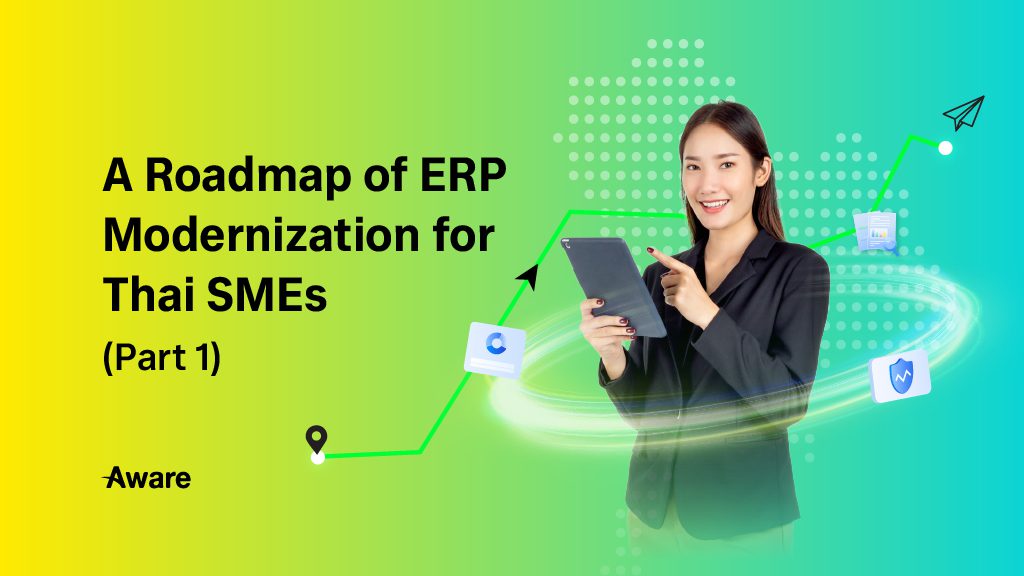
This three-part series explains why Thai SMEs must modernize now and shows how ERP, cloud, and AI can tackle tomorrow’s challenges.
This is Part 1—an executive overview of Thailand’s economic landscape, labor and logistics constraints, and policy incentives that create a window for modernization.
Read next: Part 2 — SAP Business One on AWS: Building the SME Operating System · Skip ahead: Part 3 — AI on SAP B1: Predictive Inventory, RAG Agents, and a 12‑Month Roadmap
1. Executive Landscape: The Economic Need
Anyone familiar with Thailand’s business environment knows that the country is a paradox of opportunity and challenges. This situation is often challenging, but it also offers an opportunity for forward-looking companies to both modernize their operations and to leapfrog ahead of the competition at the same time. As Thailand fights the middle-income trap, with economic growth stagnating due to rising costs without a matching rise in value creation, technology is necessary for success. The National Economic and Social Development Council (NESDC) and the World Bank both say that healthy small companies are the linchpin of sustainably resilient economies 1, but SMEs are dealing with a perfect storm of issues that traditional management methods are unable to solve.
1.1 The Demographic and Labor Crisis
The biggest threat to the Thai manufacturing and service sectors is a labor shortage, made worse by a fast-aging population. Manufacturing’s contribution to GDP has been on a steady decline from about 30% in 2010 to less than a quarter by 2024. The slide has been caused both by a lack of demand, but, more importantly, by an inability of Thai manufacturers to scale production efficiently. 2 The brain drain of skilled talent and the shrinking pool of operational staff mean that Thai SMEs can’t rely on the labor-intensive growth models of the past. The Federation of Thai Industries and the Employers’ Confederation of Thailand both say that unemployment is higher than it should be because of a skills mismatch, and industry struggles to fill technical roles. 2
There is little hope for a demographic recovery anytime soon. Visitors to Thailand quickly notice a lack of children in public, especially when compared to Vietnam or China. The new demographic reality will require a decoupling of growth from headcount. For an SME to grow in 2025, output per employee needs to rise substantially. The productivity increase, in turn, will require automation and, more importantly, a turn towards AI systems capable of running workflows autonomously. SAP Business One (SAP B1) on Amazon Web Services (AWS) can be the platform for this change, allowing businesses to digitize manual processes and reduce reliance on people for routine administrative tasks. 3
1.2 The Logistics and Inventory Conundrum
Logistics costs in Thailand are stubbornly high – up to 14.1% of GDP, well above the rate found in developed economies. 4 Inventory holding costs are a big cause of this inefficiency, and Thai SMEs, especially those in retail and manufacturing, suffer from poor demand forecasting. The traditional approach – relying on historical sales averages – doesn’t account for volatility brought about by trade and tariff shifts, to say nothing of changing supply chains.
A simple example is found in the tourism sector, an important engine of the Thai economy for decades. The industry has seen unpredictable changes in tourist arrivals, with foreign visitor numbers dropping by 6.5% in early 2025 compared to (traditionally reliable) expectations. 5
The volatility creates a bullwhip effect in the supply chain: retailers overstock to prevent stockouts during expected peaks (like Songkran or New Year), only to be left with dead stock when arrivals fail to materialize. Or, on the other hand, over-cautious understocking destroys profitability as potential revenue is never captured.
The integration of predictive analytics using tools like Amazon Forecast in the SAP B1 environment is one solution. By taking external variables (like tourist arrival data, exchange rates, and weather patterns) into account alongside internal historical data, SMEs can move from “Just-in-Case” inventory models to “Just-in-Time” precision, improving cash flow and removing what would otherwise be a logistics headache. 6
1.3 The Policy Environment: A Window of Opportunity
Thailand’s regulatory environment today provides a uniquely favorable space for change. The Thailand Board of Investment (BOI) and the Digital Economy Promotion Agency (DEPA) currently provide aggressive incentives. The “SME Digital Fund” and the BOI’s tax measures now allow for up to a 200% tax deduction on qualifying digital expenses, as they try to spark the use of modern software and automation systems. 7 The BOI has also updated its investment promotion policies to include digital infrastructure and cloud services, recognizing that they have become necessary utilities for today’s information economy. 8
For customers of Aware, the policy/ tax environment presents a rare opportunity for migration to SAP B1 on AWS as both an IT upgrade and a tax-advantaged investment supported by national policy. 9
References
- World Bank — Innovation and SMEs Crucial for Thailand’s Competitive Future
- Nation Thailand — Thai labour vulnerable across all dimensions; skills mismatch
- Aware — Cloud Migration Services (SAP B1 on AWS)
- NESDC — Thailand Logistics Report (14.1% of GDP)
- Travel And Tour World — Thailand’s Tourism Faces Sharp Decline
- AWS APN Blog — Syntax CxLink + Amazon Forecast for SAP
- PKF Thailand — Software Business Eligible for BOI Promotion
- Tilleke & Gibbins — Investment Incentive Policies for Software & Data Centers
- BIOTEC — BOI Tax Incentives for Industry 4.0
Next in the series: Part 2 — SAP Business One on AWS: Building the SME Operating System

Derek is an entrepreneur, investor, director, advisor based in Southeast Asia since 1997, focusing on early-stage investment, corporate governance, and cross-border business development.